
For most real estate investors, receiving the keys to a South Florida property feels like the finish line. In reality, closing on an asset is simply the start of its operational phase.
Whether managing a investment locally or from across the world, overseeing Miami property comes with distinct operational nuances. Without active, on-the-ground management, small oversight gaps can quickly impact long-term yields.
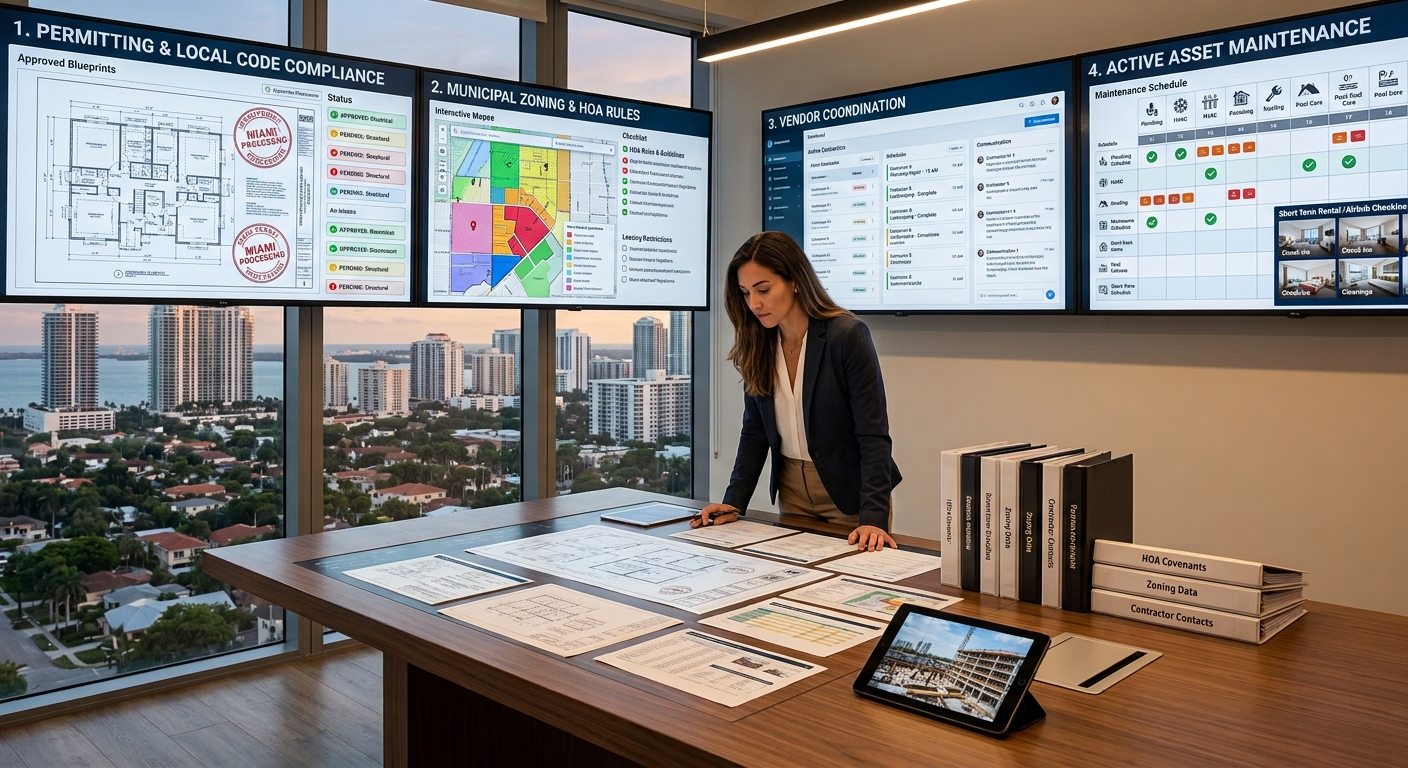
1. Permitting & Local Code Compliance
Miami has precise zoning guidelines, municipal building codes, and strict licensing requirements. Whether executing minor cosmetic renovations or establishing rental licensing, uncoordinated paperwork or unpermitted contractor work can stall operations for months and lead to unexpected municipal fines.
2. Municipal Zoning & Lease Structure Restrictions
Navigating local rental rules requires precision. Property owners often intend to alternate between short-term stays and long-term leases, only to discover specific municipal or homeowners association (HOA) restrictions that mandate strict minimum stay lengths. Aligning management practices with exact municipal zoning rules from day one prevents costly compliance issues.
3. Vendor Coordination & Project Oversight
Managing physical assets from a distance frequently leads to fragmented vendor communication—juggling contractors, handymen, inspectors, engineers, and tenants independently. Without centralized oversight, miscommunication between uncoordinated parties often causes project delays, inflated maintenance expenses, and unnecessary downtime.
4. Active Asset Maintenance
A property requires continuous, structured care to retain its market value. Whether maintaining physical curb appeal for multi-year residents or optimizing operational turnover for short-term occupants, physical assets require proactive oversight rather than reactive repairs to maintain peak performance.
The Takeaway
Real estate in South Florida remains one of the most reliable wealth preservation strategies, but its long-term success depends heavily on operational care. Navigating municipal codes, coordinating local project teams, and protecting physical assets requires a proactive, structured local presence. When property owners prepare for these management dynamics early, their real estate remains what it was intended to be: a secure, valuable long-term asset.